The days

Refreshing myself a little bit on the days of the week and just on naming the days.


maandag
dinsdag
woensdag
donderdag
vrijdag
zaterdag
zondag


eergisteren << gisteren < vandaag > morgen >> overmorgen


de ochtend – morning
de middag – afternoon
de avond – evening
de nacht – night

vrijdagavond
zondagmiddag
zondagochtend

Hen, hun en ze. The mind-blowing experience of.

It turned out that there are two words for “them” in Dutch when it comes to people — hen and hun.  And there’s the third word for “them” to refer to things — ze.

Ze
De vrouw heeft de appelen. – The woman has the apples.
De vrouw heeft ze. – The woman has them.


Hen en hun

When referring to people, the difference appears between a direct object and an indirect object.

Het meisje ziet de vrienden
. – The girl sees the friends
Zij ziet hen. – She sees them

Here het meisje is the subject and de vrienden are the direct object.


Het meisje geeft de vrienden een foto – The girl gives the friends a photo.
Zij geeft hun een foto – She gives them a photo.

In this case, what the girl gives is the direct object, it’s the photo. She gives it to friends, who are the indirect object. This is when hun kicks in.

ont-

I’ve found out that if a verb starts with “ont-” it could be one of the two following cases:

1. Adds “away”, “un-” or “release” to the meaning of a verb
nemen – to take
ontnemen – to take away, to deprive

doen – to do
ontdoen – to undo, to discard


2. Indicates the beginning of action or changing of the state
branden – to burn, to be on fire
ontbranden – to ignite, to flame up

staan – to stand
ontstaan – to come into being, to arise, to originate, to start

Fiets vs. rijwiel

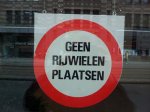
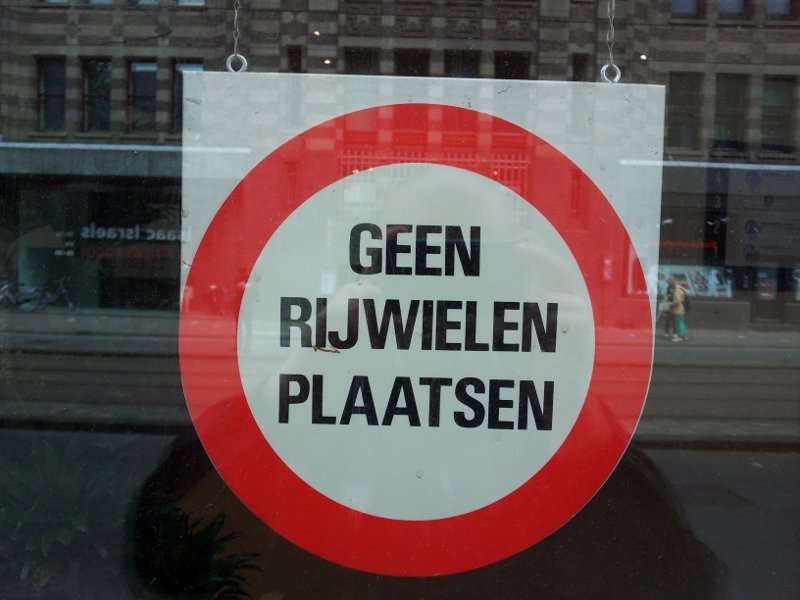
I noticed that two words for “bicycle” are used on the signs in the streets of the Netherlands. One is fiets and the other is rijwiel:
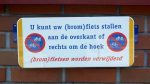
U kunt uw (brom)fiets stallen aan de overkant of rechts om de hoek. (Brom)fietsen worden verwijderd.

U kunt uw (brom)fiets stallen aan de overkant of rechts om de hoek.
(Brom)fietsen worden verwijderd.

Geen rijwielen plaatsen - No placing for bicycles

Geen rijwielen plaatsen – No placing for bicycles

I wonder what the difference is. There’s a Wikipedia article about “fiets”. If I look for “rijwiel”, I get redirected to the same article about “fiets”. My knowledge is not enough to get through the article, but according to what I could get the word “rijwiel” should no longer be in use.

I should get back to this article later, maybe after I am done with
Di3m.

Adding a few words from the article to my vocabulary:

de wetgeving – legislation
kennen, kende, gekend – to know, to be acquainted with
de hulp – help, assistance
terwijl – while, whereas
nooit – never, certainly not
behalve – except, besides, in addition to
dan – then, than